Cooperative Extension provides rewarding and challenging careers. Students and job seekers may want to consider the major Extension career pathways.
Extension Career Pathways
(Updated: April 20, 2023, 10:33 a.m.)
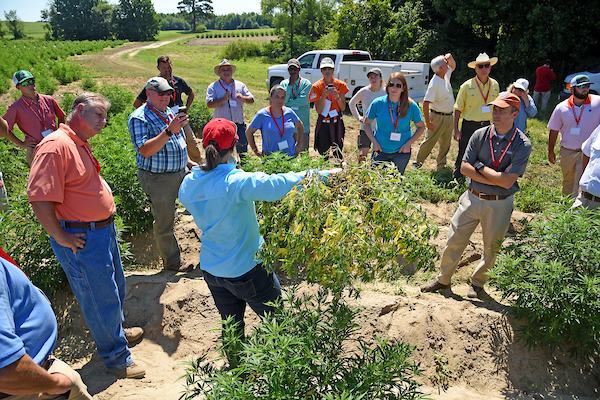
Extension Program Assistants assist Extension Agent in implementing Extension programs. Program assistants serve in all Extension programs such as Expanded Food and Nutrition Education Program (EFNEP); Food Stamp Nutrition Education Program (SNAP-ED); agricultural programs; 4-H youth development programs, and others. A high school education is always required and a Bachelor’s degree is often needed for the program assistant career.
Extension Agents are described as the “heart and soul of Cooperative Extension” (Seevers & Graham, 2012, p. 50). Typically, Extension Agents are assigned to serve one county or geographic area of multiple counties. Extension Agents conduct assessments to identify key needs, assets, and opportunities for the community. Using those needs, assets, and opportunities, they set priorities for planning, implementing, and evaluating educational programs. All of the programs are based on translating science for applied solutions to the home, farm, and community. These positions always require a bachelor’s degree and often require a Master’s degree. Extension Agents may have multiple titles depending on the institution - synonyms include Extension Advisor (Gorman, 2018) and Extension Educator (Seevers & Graham, 2012).
Extension Specialists are experts in their field, and they typically have a doctorate in the academic discipline (Gornish et al., 2018). Extension Specialists often work 100% of their time in providing professional development for Extension Agents; conducting Extension programs in concert with other Extension professionals; conducting applied research; securing extramural funding for Extension programming; answering inquiries from Extension professionals and the public; and interpreting research in the form of Extension publications and educational technologies. Some may also have formal research and/or teaching appointments in their respective academic departments (Seevers & Graham, 2012). Specialists are typically on the University tenure and promotion system whereby their promotion and tenure are based on their scholarly performance.
Extension Administrators may serve in various roles at the county, regional, state, or federal levels. A County Extension Director facilitates accountability, performance appraisal, budgeting, facilities, and supervision at the local (county) level (Seevers & Graham, 2012). A Regional Extension Director, for example, would supervise, mentor, appraise and support Extension personnel who worked in a defined geographic area, often a multi-county region of the state. State administrators provide leadership, administration, and budgetary oversight for a statewide Extension program (such as Family and Consumer Sciences) or an entire unit (such as the Department Extension Leader for the University Department of Agricultural and Extension Education). Extension administrators at the regional, state, and federal levels need at least a Master’s degree and often a doctoral degree is required.
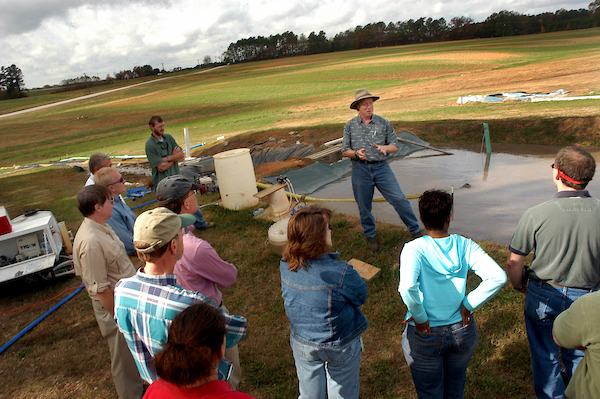
Organizational Support roles vary greatly and professionals in these roles represent a host of academic disciplines such as program evaluation, public administration, and business management. The careers may include advancement (also known as fund development); information technology; evaluation and program planning; human resources; and organizational learning (also known as staff development). Many Extension organizations have a role for an Organizational Development Leader who supports the professional development of Extension professionals to ensure they are on the cutting-edge of technology, social trends, and the latest research in their respective Extension assignments. While these roles vary, they all share a common goal to support Extension personnel in doing their jobs to their fullest capacity.
To learn more about actual Extension professional job vacancies in North Carolina, visit the NC State Extension Job Vacancy website: https://extensionhr.ces.ncsu.
To learn more about actual Extension professional job vacancies throughout the United States, visit the Extension Jobs website which includes career opportunities in Extension, outreach, research, and higher education: https://jobs.joe.org/
References
Gorman, M. (2019). Becoming an agricultural advisor – the rationale, the plan, and the implementation of a model of reflective practice in extension higher education. The Journal of Agricultural Education and Extension, 25 (2),179-191. https://10.1080/1389224X.2018.1559742Gornish, E.S., Coffey, P., Tiles, K., & Roche, L.M. (2018). Careers in Cooperative Extension. Frontiers in Ecology and the Environment 16(9). 539-540. https://doi.org/10.1002/fee.
Seevers, B. & Graham, D. (2012). Education through Cooperative Extension (3rd Ed.). University of Arkansas Bookstore.
We also have a few other email lists you can subscribe to.
Written By